Free Trial vs Demo in SaaS: How to Choose the Right Model

Published:

Reading time:

12 min read
Category:
Strategy
Illustrated businessman standing between Trial and Demo signs on a yellow background with question mark graphics

Every SaaS founder eventually faces this question: should we offer a free trial or a demo? The answer most industry guides give is it depends, which is true but useless without the variables that determine the answer. This post gives you those variables, the conversion benchmarks for each model, and the hybrid approaches that tend to outperform either choice made in isolation.

The framing matters. A demo is primarily a sales motion, involving a human showing the product and handling objections. A free trial is primarily a product motion, where the product does the selling and the buyer self-qualifies. Choosing between them is choosing a go-to-market motion more than a product feature, and the wrong choice creates structural conversion problems that design alone cannot fix.

Fewer than 25 percent of free trials convert to paid accounts across the SaaS industry, meaning 75 percent of the acquisition investment that generates trial signups produces no direct revenue. That number is not an argument against trials. It is an argument for understanding the conversion benchmarks and the design factors that determine whether a trial converts or does not.

The Four Models and Their Conversion Benchmarks

These are not four versions of the same thing. Each represents a different commercial motion, a different conversion mechanism, and a different set of design requirements.

Model

Signup rate

Trial-to-paid

Best for

Fails when

Motion type

Opt-in trial

~8.5–13% visitor-to-signup

~18% (no CC) to 25%+

Simple products, PLG, self-serve buyers

Product requires setup before value

Product-led

Opt-out trial

Lower (CC barrier)

~48–60%

High intent, moderate complexity

Reduces total signups by 60–70%

Product-led, high intent

Sales demo

High intent only

Varies by sales quality

Complex, high-ACV, enterprise buyers

Low-ACV products (doesn’t scale)

Sales-led

Freemium

~13–16% visitor-to-signup

2–5% free-to-paid

Viral, collaborative, network products

Weak upgrade triggers

Product-led, volume

Interactive demo

No friction required

Qualifies for trial/demo

Testing PLG; complex products pre-trial

No engineering resources for real trial

Hybrid / pre-trial

Why the Benchmarks Are Misleading Without Context

The widely-cited 18.2 percent opt-in trial conversion rate, drawn from 86 SaaS companies, looks clear until you see a separate 2026 dataset of 200 products that puts the same number at 8.9 percent. The gap is not a measurement error. It reflects the diversity of product types, deal sizes, and onboarding quality baked into each sample.

The benchmarks that hold more consistently across studies are the relative comparisons. Opt-out trials requiring a credit card convert at roughly 2.5 to 3 times the rate of opt-in trials, but generate 60 to 70 percent fewer signups because the credit card requirement is a genuine acquisition barrier. The net outcome is product-specific: if your trial converts well because the product delivers fast obvious value, opt-out usually wins on net revenue. If your trial converts poorly because the product requires significant setup, opt-out compounds the problem by also reducing your top-of-funnel.

Freemium's 2 to 5 percent conversion rate looks dismal until you notice that freemium products attract visitor-to-signup rates of 13 to 16 percent compared to 7 to 8 percent for trials, reflecting the zero-friction entry. Slack converts 8 to 10 percent of active free workspaces to paid, but 80 percent of those paid workspaces started as free teams. The freemium funnel runs on volume and network effects, not on individual conversion efficiency.

Slack homepage screenshot with the tagline ‘Slack brings the team together wherever you are’

Variable 1: Product Complexity and Time-to-Value

The single most predictive variable for trial success is how quickly a new user can reach a meaningful outcome without assistance. Free trials work best for simple, intuitive products that users can easily explore on their own. When setup requires configuration, data import, team onboarding, or IT approval, the trial clock runs out before the product has demonstrated value.

A useful proxy: how many steps and how many minutes from account creation to first output that the user would actually care about? If the answer is more than 7 to 10 minutes or more than 5 steps, you have an onboarding friction problem that will cap trial conversion regardless of the trial model chosen. The SaaS onboarding engagement Morphic redesigned that onboarding friction problem that will cap trial conversion regardless of the trial model chosen. The SaaS onboarding engagement Morphic redesigned that took activation from 34% to 61% in 90 days was fundamentally about reducing that distance, and that same reduction is what separates high-converting trials from low-converting ones.took activation from 34% to 61% in 90 days was fundamentally about reducing that distance, and that same reduction is what separates high-converting trials from low-converting ones.

Decision signal: if your product’s time-to-value exceeds 10 minutes for an unsupported user, start with a demo. Design the product for faster activation. Then add a trial.
SaaS free-trial design pattern diagram showing UI flow and screen states

Variable 2: Average Contract Value

Demos do not scale at low deal sizes. A sales demo that costs $800 to $1,200 in time and labour makes commercial sense at $12,000 ACV; it does not make sense at $1,200. Conversely, a free trial that generates no revenue from 75 percent of signups only makes commercial sense if the product can self-qualify users and deliver value without human intervention.

As a rough guide: below $3,000 ACV, a scalable product motion (trial or freemium) is almost always the right primary channel. Above $15,000 ACV, a demo-led motion is almost always justified. In the $3,000 to $15,000 range, both can work, and the decision depends on the complexity and buyer journey variables.

Decision signal: below $3,000 ACV, use a trial or freemium. Above $15,000 ACV, use a demo. The middle range requires honest assessment of how much self-service qualification your product enables.

Variable 3: Buyer Journey, Self-Serve or Sales-Assisted

Some products are bought by individuals who self-qualify and pay immediately. Others require IT approval, procurement, legal review, or a multi-stakeholder buying committee. Trials are structurally suited to the former, because they accelerate individual decisions. Demos are structurally suited to the latter, because they put a human in the loop who can navigate the buying process across multiple stakeholders.

The B2B reality is that even self-serve products often have a second stakeholder layer: the person who signs up is often not the person who approves the budget. This is the most common reason trial-first strategies underperform at mid-market, because the product experience was optimised for the individual evaluator but not for the budget approver who never logged in.

Decision signal: if your buyer journey involves a procurement or IT veto, or requires a business case for a CFO, the trial alone will not close the deal. Build a demo or sales-assist layer.

SaaS acquisition model decision flowchart with branching logic nodes

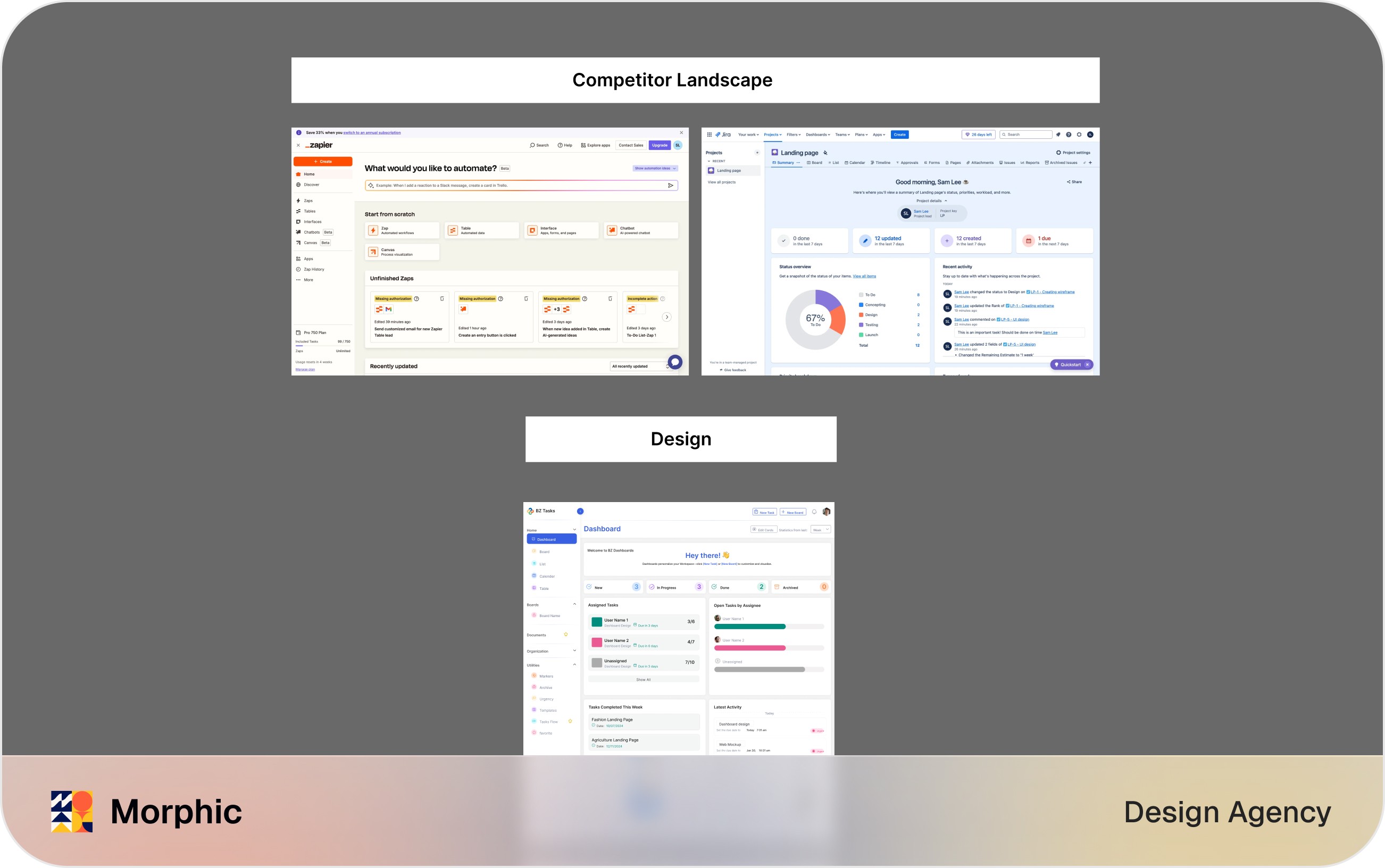
Variable 4: Competitor Landscape and Category Expectations

If every significant competitor in your category offers a free trial, adding a friction-heavy demo-first motion puts you at a systematic disadvantage in self-serve searches. Conversely, if your category is predominantly demo-led, as in complex enterprise software, deep integrations, and regulated industries, a just-try-it free trial might signal that the product is less sophisticated than buyers expect.

The category expectation shapes the prospect's mental model before they reach your site. Interactive demos can bridge this gap effectively, because they give evaluators the try-it experience without the setup overhead of a real trial instance, which is why they have become common for complex products as a pre-trial or pre-demo qualification layer.

Decision signal: check what the top three competitors in your category offer. Matching the category default is not mandatory, but departing from it requires a clear reason that your prospects will recognise.

When You Choose a Trial: The Design Factors That Determine Conversion

The model is the container. What is inside, meaning the onboarding experience, the upgrade triggers, and the expiry sequence, is what actually moves the conversion rate. These are the design factors with the most consistent impact.

Fast first value, before day 3. Most B2B conversions happen when the trial expires, but the decision to convert was made in the first 7 days. The product needs to deliver a memorable outcome early, before the evaluator's attention moves elsewhere. If activation does not happen by day 3, the trial window is usually lost.

Trial length matched to time-to-value, not convention. The industry default of 14 days made sense when software required installation. For SaaS, the right trial length is however long it takes to reach first value plus enough time to use it meaningfully, which is often 7 days for simple products and 21 to 30 for complex ones. Longer trials do not consistently improve conversion; better activation within shorter windows does.

Contextual upgrade prompts tied to usage, not timers. The upgrade CTA that converts is the one that appears at the moment a user hits a meaningful product limitation, not a generic upgrade-now banner on day 5. The prompt that says you have run 9 reports this month and the Pro plan removes the 10-report limit converts because it references the user's actual behaviour.

Expiry-pressure sequence that shows accumulated value. The final 3 to 5 days of a trial are when urgency-based conversion is possible. The most effective expiry emails reference specific things the user did during the trial, such as reports generated, files created, and teammates invited, rather than generic product features. You have built X during your trial converts better than don't miss out.

Opt-in versus opt-out: match to your CAC economics. Opt-out trials produce roughly 2.5 to 3 times higher trial-to-paid conversion rates but with 60 to 70 percent lower signup volume. If your CAC payback allows you to invest in a smaller but higher-intent pool, opt-out often wins on net revenue. If volume matters more than per-trial efficiency, opt-in is the better model.

Hybrid Approaches That Tend to Outperform Either Alone

The most effective SaaS acquisition setups usually combine models rather than choose between them. Three hybrids that work.

Interactive demo plus trial. An interactive demo on the website, meaning a clickable replica of the product loaded with sample data and requiring no login, reduces the friction of trial signup by giving evaluators enough product confidence to commit their email address. The interactive demo handles comprehension; the trial handles conversion. Companies using this combination report higher trial signup rates and better activation, because users who start the trial already have a mental model of what they are activating.

Trial plus sales-assist at day 5 to 7. For mid-market products where self-service alone does not close, a triggered sales outreach at the point of demonstrated engagement, such as noting that the user has connected their CRM and run three reports, converts at materially higher rates than either pure self-service or cold outbound. The timing is specific: outreach triggered by product behaviour converts better than outreach triggered by a calendar.

Demo-first, trial-on-request. For complex products where unsupported trial attempts typically fail, leading with a demo and making the trial available only after a call can improve both the demo attendance rate and the trial conversion rate. The trial becomes a validation tool for buyers who already understand the product, rather than a confusion generator for buyers who do not.

The Decision Framework: Which Model for Which Situation

Across the four variables, this table maps the right primary model per situation.

Variable

Opt-in trial

Opt-out trial

Demo

Freemium

Product complexity

Low, fast time-to-value

Low to moderate

High, needs guidance

Very low, instant value

ACV

Low to mid ($500–5K)

Mid ($2K–15K)

High ($10K+)

Low (<$1,000 or free)

Buyer journey

Individual / self-serve

Individual, high intent

Multi-stakeholder

Individual or viral team

Signup friction

Low, email only

High, CC required

Low, calendar invite

Zero, no account needed

Upgrade trigger

Onboarding + expiry

Auto-billing at expiry

Proposal + negotiation

Feature ceiling hit

Fails if...

Product can't self-activate

Top-of-funnel too narrow

ACV too low to justify

No clear upgrade trigger

The Bottom Line

The free trial versus demo decision is really a go-to-market motion decision. Free trials are product-led; demos are sales-led. The right answer depends on four variables: how complex your product is, how fast users can reach value without help, your average deal size, and your buyer’s journey. Most SaaS products perform best with a hybrid, meaning a trial for self-serve buyers, a demo for enterprise or multi-stakeholder buyers, and an interactive demo to bridge the gap between the two. Start with demos, learn from them, then add the trial motion when the product can self-activate.

The trial experience is a UX problem as much as a go-to-market one. Onboarding design, upgrade triggers, and first-value sequencing are the design layer that sits between your model choice and your conversion rate. See how Morphic approaches SaaS product design, starting with a free 3-day trial before your first invoice.

Key Takeaways

Icon

A demo is a sales motion and a free trial is a product motion, so choosing between them is choosing a go-to-market model, not a product feature.

Icon

Fewer than 25 percent of free trials convert to paid, which makes time-to-value the single most predictive variable for whether a trial model works at all.

Icon

Opt-out trials convert at roughly 2.5 to 3 times the opt-in rate but generate 60 to 70 percent fewer signups, so the right choice depends on your CAC economics.

Icon

Below $3,000 ACV a trial or freemium is almost always right; above $15,000 ACV a demo-led motion is almost always justified.

Icon

If time-to-value exceeds 10 minutes for an unsupported user, start with a demo, fix activation, then add the trial once the product can self-activate.

Image
Emon Datta

Founder, Morphic Agency

Morphic Agency is a Melbourne-based UX design agency. We've shipped 50+ products across 15+ countries.

Icon
Icon
Icon
Have a Project in Mind? Let's Chat.
Share
Instagram
Facebook
Twitter
Icon

FAQ

Frequently Asked Questions

What is the average SaaS free trial conversion rate?

It varies significantly by model. Opt-in trials with no credit card average roughly 18 percent trial-to-paid in one dataset of 86 companies, while a separate 2026 dataset of 200 products shows 8.9 percent. Opt-out trials requiring a credit card convert at 48 to 60 percent but reduce signups by 60 to 70 percent. A rate below 15 percent for an opt-in trial warrants investigation across onboarding quality and time-to-value.

Should early-stage SaaS offer a free trial or a demo?

For most early-stage products, starting with demos is lower risk and higher learning. Demos generate direct feedback about objections, use cases, and what prospects do not understand, and that feedback improves the product before the self-serve trial motion is built. Demos are the natural starting point because they are how companies learn what their ICP actually needs before committing to a product-led acquisition model.

What is the difference between an opt-in and opt-out trial?

An opt-in trial requires no credit card and lets users start without payment commitment, so they must actively choose to subscribe at the end. An opt-out trial requires a credit card upfront and converts automatically at expiry unless the user cancels. Opt-out trials produce roughly 2.5 to 3 times higher trial-to-paid conversion rates, but generate 60 to 70 percent fewer signups because the credit card requirement is a meaningful acquisition barrier.

What is freemium and when does it work?

Freemium is a permanently free tier with limited features or usage, as distinct from a time-limited trial. It works for products with network effects such as collaboration tools and communication platforms, products with very fast time-to-value, and products where the free experience creates viral adoption loops. Freemium attracts 13 to 16 percent visitor-to-signup rates but converts only 2 to 5 percent of free users to paid. Without a clear upgrade trigger, freemium creates a large inactive free base that consumes infrastructure without converting.

Can we offer both a demo and a free trial?

Yes, and for many products a hybrid performs better than either alone. The most effective combination for complex products is an interactive demo on the website that reduces trial signup friction, followed by a trial with sales-assist triggered by product engagement signals. For simpler products, a trial with a demo available on request captures both self-serve and sales-assisted buyers without requiring them to go through a call.

Icon

FAQ

Frequently Asked Questions

What is the average SaaS free trial conversion rate?

It varies significantly by model. Opt-in trials with no credit card average roughly 18 percent trial-to-paid in one dataset of 86 companies, while a separate 2026 dataset of 200 products shows 8.9 percent. Opt-out trials requiring a credit card convert at 48 to 60 percent but reduce signups by 60 to 70 percent. A rate below 15 percent for an opt-in trial warrants investigation across onboarding quality and time-to-value.

Should early-stage SaaS offer a free trial or a demo?

For most early-stage products, starting with demos is lower risk and higher learning. Demos generate direct feedback about objections, use cases, and what prospects do not understand, and that feedback improves the product before the self-serve trial motion is built. Demos are the natural starting point because they are how companies learn what their ICP actually needs before committing to a product-led acquisition model.

What is the difference between an opt-in and opt-out trial?

An opt-in trial requires no credit card and lets users start without payment commitment, so they must actively choose to subscribe at the end. An opt-out trial requires a credit card upfront and converts automatically at expiry unless the user cancels. Opt-out trials produce roughly 2.5 to 3 times higher trial-to-paid conversion rates, but generate 60 to 70 percent fewer signups because the credit card requirement is a meaningful acquisition barrier.

What is freemium and when does it work?

Freemium is a permanently free tier with limited features or usage, as distinct from a time-limited trial. It works for products with network effects such as collaboration tools and communication platforms, products with very fast time-to-value, and products where the free experience creates viral adoption loops. Freemium attracts 13 to 16 percent visitor-to-signup rates but converts only 2 to 5 percent of free users to paid. Without a clear upgrade trigger, freemium creates a large inactive free base that consumes infrastructure without converting.

Can we offer both a demo and a free trial?

Yes, and for many products a hybrid performs better than either alone. The most effective combination for complex products is an interactive demo on the website that reduces trial signup friction, followed by a trial with sales-assist triggered by product engagement signals. For simpler products, a trial with a demo available on request captures both self-serve and sales-assisted buyers without requiring them to go through a call.

Icon

FAQ

Frequently Asked Questions

What is the average SaaS free trial conversion rate?

It varies significantly by model. Opt-in trials with no credit card average roughly 18 percent trial-to-paid in one dataset of 86 companies, while a separate 2026 dataset of 200 products shows 8.9 percent. Opt-out trials requiring a credit card convert at 48 to 60 percent but reduce signups by 60 to 70 percent. A rate below 15 percent for an opt-in trial warrants investigation across onboarding quality and time-to-value.

Should early-stage SaaS offer a free trial or a demo?

For most early-stage products, starting with demos is lower risk and higher learning. Demos generate direct feedback about objections, use cases, and what prospects do not understand, and that feedback improves the product before the self-serve trial motion is built. Demos are the natural starting point because they are how companies learn what their ICP actually needs before committing to a product-led acquisition model.

What is the difference between an opt-in and opt-out trial?

An opt-in trial requires no credit card and lets users start without payment commitment, so they must actively choose to subscribe at the end. An opt-out trial requires a credit card upfront and converts automatically at expiry unless the user cancels. Opt-out trials produce roughly 2.5 to 3 times higher trial-to-paid conversion rates, but generate 60 to 70 percent fewer signups because the credit card requirement is a meaningful acquisition barrier.

What is freemium and when does it work?

Freemium is a permanently free tier with limited features or usage, as distinct from a time-limited trial. It works for products with network effects such as collaboration tools and communication platforms, products with very fast time-to-value, and products where the free experience creates viral adoption loops. Freemium attracts 13 to 16 percent visitor-to-signup rates but converts only 2 to 5 percent of free users to paid. Without a clear upgrade trigger, freemium creates a large inactive free base that consumes infrastructure without converting.

Can we offer both a demo and a free trial?

Yes, and for many products a hybrid performs better than either alone. The most effective combination for complex products is an interactive demo on the website that reduces trial signup friction, followed by a trial with sales-assist triggered by product engagement signals. For simpler products, a trial with a demo available on request captures both self-serve and sales-assisted buyers without requiring them to go through a call.

Icon

TESTIMONIALS

Real feedback from founders and product teams we have worked with.

  • I have had the pleasure of working with Morphic for over a year and he has consistently been very creative, kind and attentive person to work with! He is very attentive, intuitive and is truly talented! He is absolutely wonderful!

    Author Image
    Ashley Sabatini

    Founder, Breathwork

  • I have had the pleasure of working with Morphic for over a year and he has consistently been very creative, kind and attentive person to work with! He is very attentive, intuitive and is truly talented! He is absolutely wonderful!

    Tobias F

    Founder & CEO, MingleMinds

  • Working with Emon was amazing. I initially gave him a take home design assignment with clear goals and he was able to understand my vision with no problem. That delivery was on time and we have collaborated on everything from wireframes to the complete UX/UI of my project. I will continue working with him at every chance possible. You should too!

    Author Image
    Tobias F

    Founder, MingleMinds

  • Working with Emon was a great experience. Super clear communication, easy to work with, and he pushed us in the right direction. The designs were creative, practical. The project is now one of our most successful features. 100% recommend.

    Author Image
    Callum Johnstone

    Product Owner, Nursery Story

  • Morphic was fantastic to work with - putting in a lot of effort to make sure he understood the assignment and requirements. He came up with some great designs, absolutely nailing the brief. Look forward to working with him again. Thanks Emon!

    Author Image
    Sam

    Founder, Amigos

  • Top-tier Website designer. Great communication, fast delivery, and excellent usability improvements.

    Author Image
    Eric

    CoFounder, GKM Interactive

  • Emon is a talented and reliable designer with a great eye for detail. He quickly understood the project goals and delivered clean, modern designs that matched our vision. Communication was smooth and professional throughout the process, and he was always open to feedback and ready to adjust things when needed. Highly recommended for anyone looking for high-quality UX/UI work.

    Author Image
    Kaja Rutkowska

    CoFounder, Petifit

  • Emon is an amazing human and wonderful person to work with. His attention to detail and sole focus on each individual project he undertakes makes getting the job done feel like a breeze. I’ve personally worked with Emon on near 50+ projects all of which Emon has shown immense care and dedication to all work. Communication was a 10/10, he always put in overtime in making sure the work and overall goal was clearly stated and achieved. As a person he has an amazing heart and always there to support and help no matter what. He is a good man and a really strong employee that can be counted on!

    Author Image
    Jude Lopez

    Founder, HomeIO

Icon

TESTIMONIALS

Real feedback from founders and product teams we have worked with.

  • I have had the pleasure of working with Morphic for over a year and he has consistently been very creative, kind and attentive person to work with! He is very attentive, intuitive and is truly talented! He is absolutely wonderful!

    Author Image
    Ashley Sabatini

    Founder, Breathwork

  • I have had the pleasure of working with Morphic for over a year and he has consistently been very creative, kind and attentive person to work with! He is very attentive, intuitive and is truly talented! He is absolutely wonderful!

    Tobias F

    Founder & CEO, MingleMinds

  • Working with Emon was amazing. I initially gave him a take home design assignment with clear goals and he was able to understand my vision with no problem. That delivery was on time and we have collaborated on everything from wireframes to the complete UX/UI of my project. I will continue working with him at every chance possible. You should too!

    Author Image
    Tobias F

    Founder, MingleMinds

  • Working with Emon was a great experience. Super clear communication, easy to work with, and he pushed us in the right direction. The designs were creative, practical. The project is now one of our most successful features. 100% recommend.

    Author Image
    Callum Johnstone

    Product Owner, Nursery Story

  • Morphic was fantastic to work with - putting in a lot of effort to make sure he understood the assignment and requirements. He came up with some great designs, absolutely nailing the brief. Look forward to working with him again. Thanks Emon!

    Author Image
    Sam

    Founder, Amigos

  • Top-tier Website designer. Great communication, fast delivery, and excellent usability improvements.

    Author Image
    Eric

    CoFounder, GKM Interactive

  • Emon is a talented and reliable designer with a great eye for detail. He quickly understood the project goals and delivered clean, modern designs that matched our vision. Communication was smooth and professional throughout the process, and he was always open to feedback and ready to adjust things when needed. Highly recommended for anyone looking for high-quality UX/UI work.

    Author Image
    Kaja Rutkowska

    CoFounder, Petifit

  • Emon is an amazing human and wonderful person to work with. His attention to detail and sole focus on each individual project he undertakes makes getting the job done feel like a breeze. I’ve personally worked with Emon on near 50+ projects all of which Emon has shown immense care and dedication to all work. Communication was a 10/10, he always put in overtime in making sure the work and overall goal was clearly stated and achieved. As a person he has an amazing heart and always there to support and help no matter what. He is a good man and a really strong employee that can be counted on!

    Author Image
    Jude Lopez

    Founder, HomeIO

Icon

TESTIMONIALS

Real feedback from founders and product teams we have worked with.

  • I have had the pleasure of working with Morphic for over a year and he has consistently been very creative, kind and attentive person to work with! He is very attentive, intuitive and is truly talented! He is absolutely wonderful!

    Author Image
    Ashley Sabatini

    Founder, Breathwork

  • I have had the pleasure of working with Morphic for over a year and he has consistently been very creative, kind and attentive person to work with! He is very attentive, intuitive and is truly talented! He is absolutely wonderful!

    Tobias F

    Founder & CEO, MingleMinds

  • Working with Emon was amazing. I initially gave him a take home design assignment with clear goals and he was able to understand my vision with no problem. That delivery was on time and we have collaborated on everything from wireframes to the complete UX/UI of my project. I will continue working with him at every chance possible. You should too!

    Author Image
    Tobias F

    Founder, MingleMinds

  • Working with Emon was a great experience. Super clear communication, easy to work with, and he pushed us in the right direction. The designs were creative, practical. The project is now one of our most successful features. 100% recommend.

    Author Image
    Callum Johnstone

    Product Owner, Nursery Story

  • Morphic was fantastic to work with - putting in a lot of effort to make sure he understood the assignment and requirements. He came up with some great designs, absolutely nailing the brief. Look forward to working with him again. Thanks Emon!

    Author Image
    Sam

    Founder, Amigos

  • Top-tier Website designer. Great communication, fast delivery, and excellent usability improvements.

    Author Image
    Eric

    CoFounder, GKM Interactive

  • Emon is a talented and reliable designer with a great eye for detail. He quickly understood the project goals and delivered clean, modern designs that matched our vision. Communication was smooth and professional throughout the process, and he was always open to feedback and ready to adjust things when needed. Highly recommended for anyone looking for high-quality UX/UI work.

    Author Image
    Kaja Rutkowska

    CoFounder, Petifit

  • Emon is an amazing human and wonderful person to work with. His attention to detail and sole focus on each individual project he undertakes makes getting the job done feel like a breeze. I’ve personally worked with Emon on near 50+ projects all of which Emon has shown immense care and dedication to all work. Communication was a 10/10, he always put in overtime in making sure the work and overall goal was clearly stated and achieved. As a person he has an amazing heart and always there to support and help no matter what. He is a good man and a really strong employee that can be counted on!

    Author Image
    Jude Lopez

    Founder, HomeIO